Energy
The energy sector — an estimated $7–8 trillion global market projected to attract over $35 trillion in investment by 2050 — spans fossil fuels, nuclear power, renewables, grid infrastructure, and smart energy services.

The energy sector — an estimated $7–8 trillion global market projected to attract over $35 trillion in investment by 2050 — spans fossil fuels, nuclear power, renewables, grid infrastructure, and smart energy services.
A successful cyberattack doesn't just disrupt data; it can black out cities, halt fuel supply, or compromise nuclear safety systems. FireBreak™ physically isolates critical control systems — SCADA, PLCs, turbine controllers, substation relays, and reactor safety subsystems — eliminating remote attack vectors entirely.
Built for a hyperconnected landscape of over 41 billion IoT devices, FireBreak™ enables role-based physical access across generation, transmission, and distribution assets, whether centralized or distributed. Aligns with NIS2, UK CNI mandates, ISO 27001, and the US DOE's Cyber-Informed Engineering Strategy.

Energy systems run on an intricate web of OT (SCADA, PLCs), IT (enterprise networks), and a rapidly expanding IoT/IIoT layer — smart meters, sensors, predictive maintenance platforms. Over 145,000 ICS/OT systems are already exposed online across 175+ countries, many of them energy-critical.
Because energy is physical infrastructure, disruption isn't abstract — it's heat, light, transport, and national stability. And as renewable generation and microgrids decentralize the grid, the number of access points grows while centralized visibility shrinks.
Ransomware exploits remote access points, VPNs, and maintenance interfaces to halt production or extort operators, causing cascading blackouts and fuel shortages.
Nation-state actors target grid operators, refineries, and nuclear facilities to disrupt supply, compromise safety systems, or steal proprietary technology.
Legacy control systems — decades old, unpatched, poorly segmented — cannot be easily replaced and are often hastily connected to digital networks.
NIS2, UK CNI mandates, and US DOE CIE demand demonstrable resilience, transparent reporting, and continuous risk assessment across every energy domain.

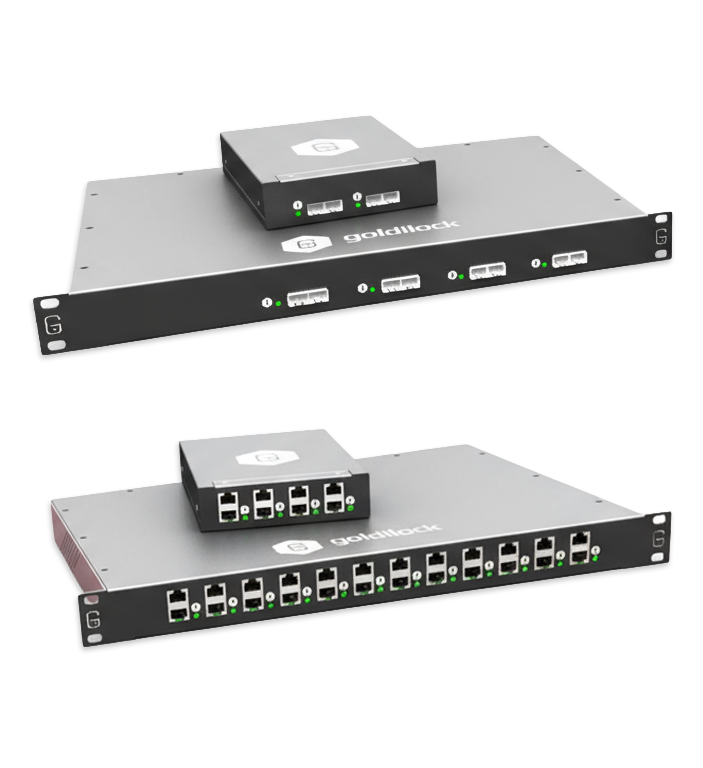
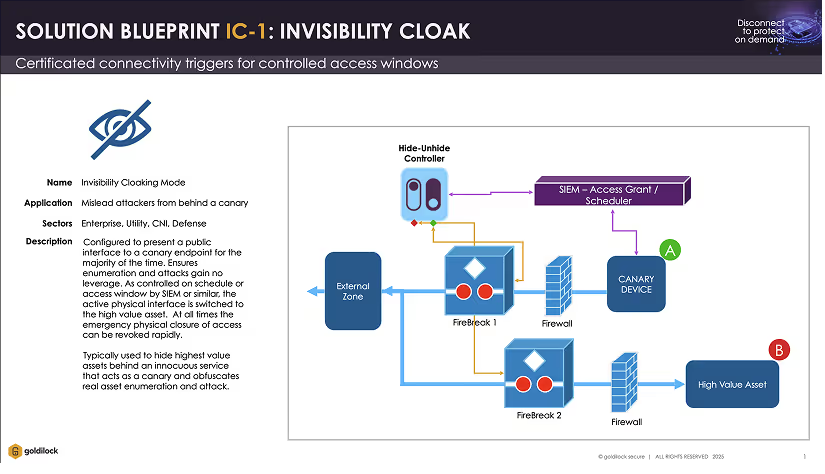
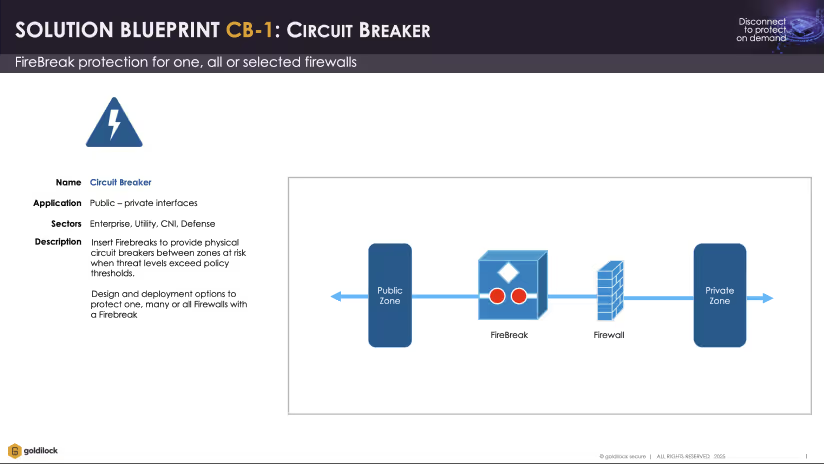
Physically isolates core OT systems — SCADA, PLCs, turbine and inverter controllers, reactor command modules — from enterprise and cloud networks. When not in use, these assets carry no IP address, no digital footprint, and no remote access.
Substations and distributed assets (solar farms, EV charging networks, regional aggregation points) connect only for authorized, time-bound polling or maintenance — otherwise fully severed, preventing lateral movement across decentralized infrastructure.
Air-gapped backup and disaster recovery infrastructure stays physically unreachable until a backup window or disaster declaration triggers connection, guaranteeing clean, verified restoration after an attack.
Event-driven triggers from SIEM or intrusion detection systems activate disconnection within milliseconds — preserving grid stability and stopping cascading failures before they propagate.
Role-based, time-bound physical access supports remote maintenance crews and third-party technicians at unmanned or distributed sites, backed by MFA and immutable audit logs.
Delivers "Zero Connectivity Assurance" — the absence of connection, not the strength of encryption, as the highest form of security — supporting NIS2, UK CNI, ISO 27001, and US DOE CIE compliance across fossil fuel, nuclear, renewable, grid, and smart energy environments alike.
If you're still in search of answers, we encourage you to explore our informative FAQ section.