Oil & Gas
A new line of defense for the unique and diverse critical OT and IT environments of the oil and gas sector. Physical protection of network assets from system software vulnerabilities.

A new line of defense for the unique and diverse critical OT and IT environments of the oil and gas sector. Physical protection of network assets from system software vulnerabilities.
Oil and gas operations form the backbone of the global economy and national security. A successful cyberattack can result in pipeline shutdowns, refinery safety system manipulation, wellhead blowouts, or environmental disaster. FireBreak™ physically isolates critical control systems, including Experion® PKS, Safety Manager, remote SCADA units, and pipeline RTUs, eliminating remote attack vectors entirely.
Designed for dispersed and often unmanned infrastructure, FireBreak™ enables role-based physical access for remote sites, vendor management, and supply chain control. Aligns with ISA/IEC 62443, TSA Pipeline Security Directives, and the Purdue Model.

Oil and gas operations form the backbone of the global economy — and a successful cyberattack carries kinetic consequences: pipeline shutdowns, safety system manipulation, wellhead blowouts, or environmental disaster.
The digital oilfield, integrating IIoT, remote operations, and advanced platforms for efficiency, has exponentially broadened the attack surface, outpacing many security efforts.
Geographically dispersed, often unmanned infrastructure presents unique challenges for both access governance and incident response.
The Colonial Pipeline incident demonstrated how ransomware can shut down national energy infrastructure.
Legacy control systems with long operational lifecycles cannot be easily patched or replaced.
Remote unmanned facilities, such as compressor stations and offshore platforms, present governance challenges for third-party access.
ISA/IEC 62443 and TSA Pipeline Security Directives demand demonstrable segmentation and audit capability.

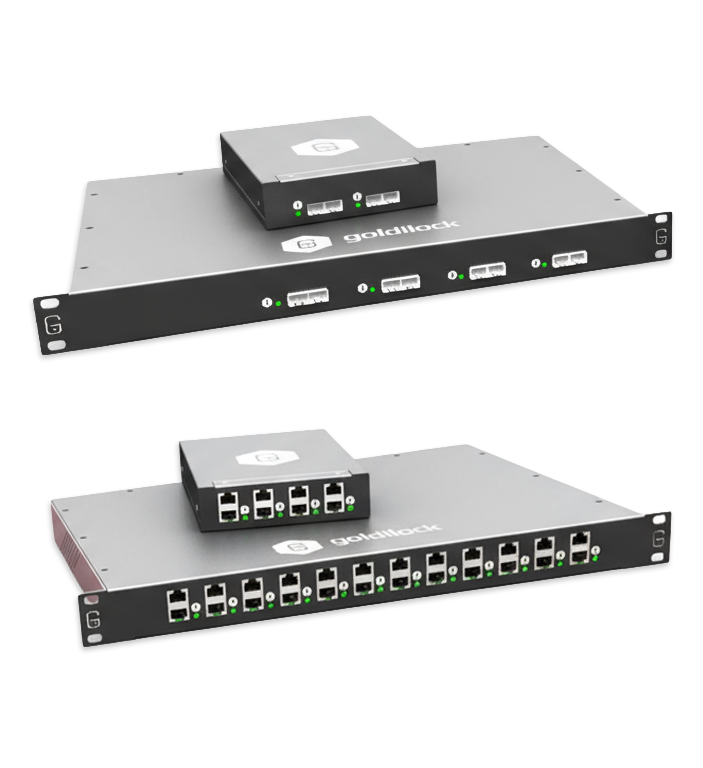
Physically isolates critical process control systems, including DCS platforms, safety instrumented systems, and remote SCADA units, from all network connectivity. When not in use, these assets are invisible and unreachable.
Pipeline RTUs only establish physical network connections for authorized, time-bound data polling or maintenance. Otherwise, they remain completely severed, preventing manipulation of valve controls or field instrumentation.
Air-gapped backups ensure DCS configuration files and safety system logic are stored on physically unreachable devices, enabling rapid restoration from clean backups following ransomware or wiper attacks.
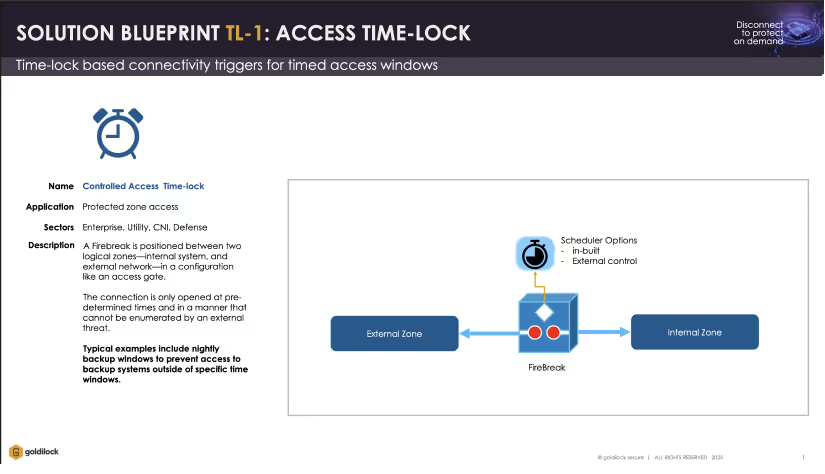
Role-based physical access for remote sites enables technician diagnostics at unmanned offshore platforms and remote facilities within predefined time windows, supported by MFA and immutable logs.
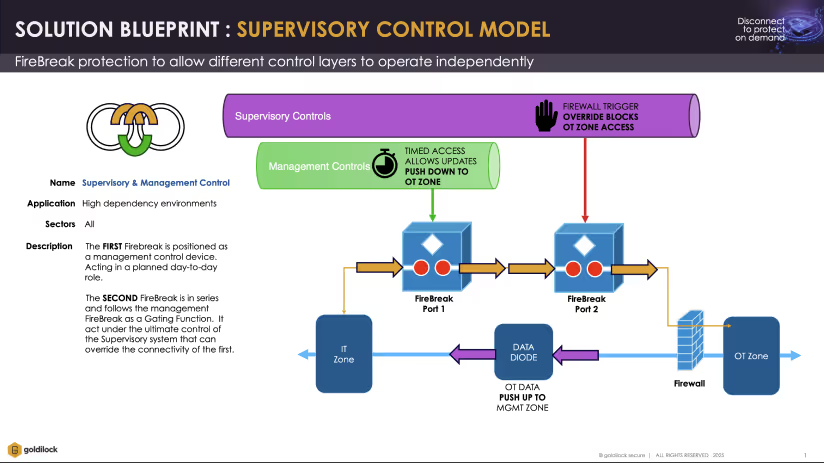
IT/OT segmentation aligned with the Purdue Model ensures that even a compromised engineer workstation cannot propagate to core refinery or pipeline control systems.
Supports ISA/IEC 62443 and TSA Pipeline Security Directive requirements, with immutable logs providing precise connection times, personnel tracking, and termination records for regulatory audits.
If you're still in search of answers, we encourage you to explore our informative FAQ section.